
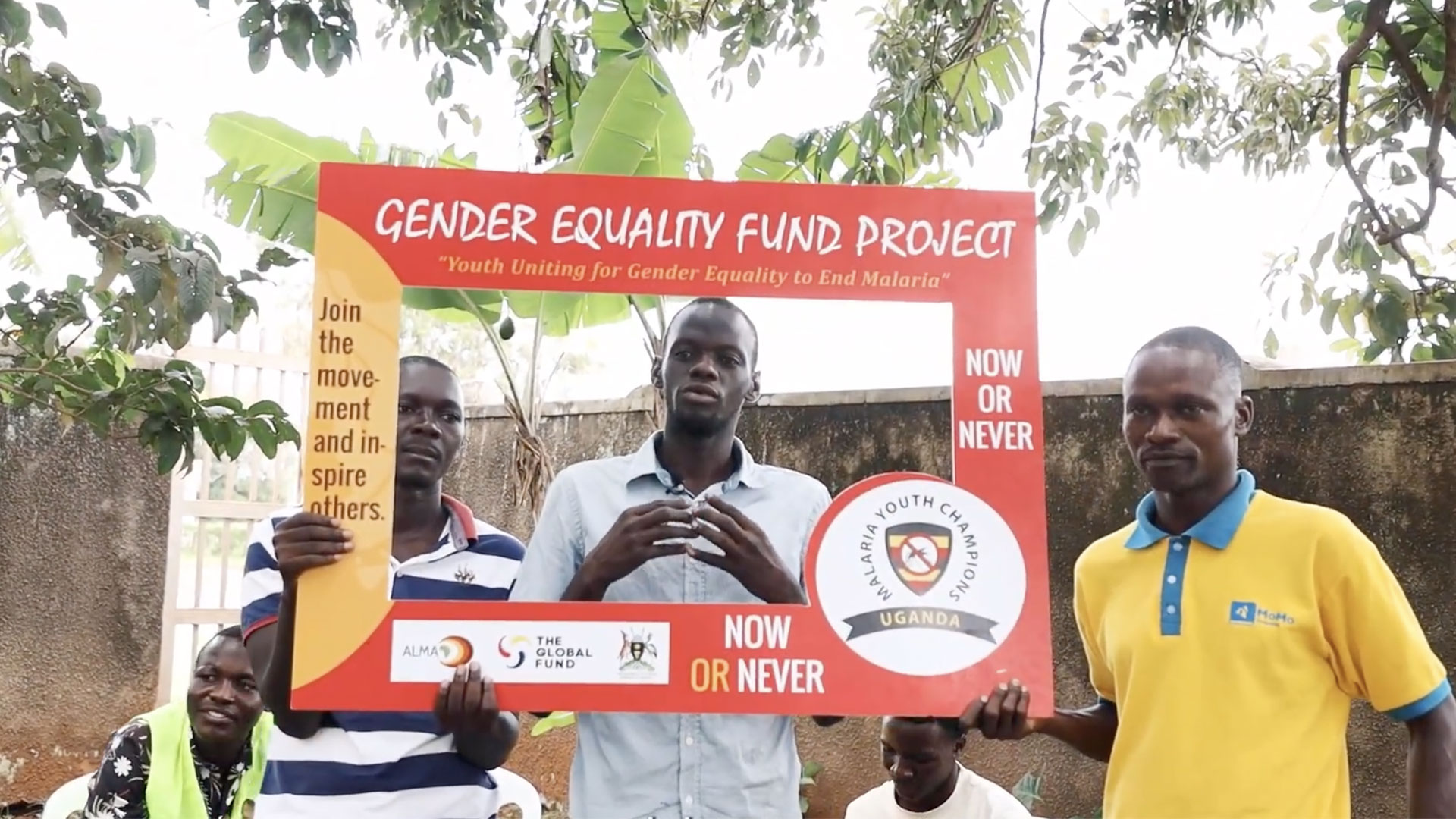
The Malaria Youth team conducted a district engagement and community dialogue in Iganga District to review findings from the GEF Community Scorecard at Nakavule Hospital. The activity assessed progress on previous action points, evaluated health service delivery, and engaged communities on key malaria and maternal health challenges. The engagement aimed to strengthen accountability, improve service quality, and inform priority interventions.
1. Iganga District Entry and Engagement Meeting
The Malaria Youth team conducted an initial entry and engagement meeting with the Iganga District Health Team to provide feedback on the GEF project and review findings from the Community Scorecard (Quarter 3, 2025) conducted at Nakavule Hospital. The meeting also assessed progress on action points developed in September 2025, finalized the approach for the upcoming community dialogue, and scheduled a follow-up feedback meeting.
Key burden issues highlighted from Quarter 2 and Quarter 3 Community Scorecards included challenges related to Community Health Worker (VHT) home visits, ambulance services, healthcare costs, and patient care. Communities reported infrequent VHT visits, limited health information sharing when activities were not donor-funded, and lack of basic medicines for first-line treatment. Ambulance services were noted to be inconsistent, often requiring payment, with limited community awareness on emergency procedures and fuel budget discrepancies.
Concerns were also raised regarding lack of caring, respectful, and compassionate care, particularly within the laboratory, labour suite, and antenatal outpatient department. Additional barriers to healthcare access included high service costs, social bias, clinician preference for private facilities, frequent stock-outs of medicines, limited accessibility for persons with disabilities, and harassment of motorcycle riders transporting emergency patients.
2. Facility Tour – Nakavule Hospital
To reassess service delivery conditions and infrastructure, the Malaria Youth team, together with youth and community representatives, conducted a guided facility tour of Nakavule Hospital. The visit focused on evaluating cleanliness, functionality, and accessibility of toilets, wards, consultation rooms, and waiting areas. Observations from the tour informed subsequent community dialogue discussions and scoring.
3. Community Dialogues – Nakavule / Iganga District Hospital
The third round of community dialogues was held in Nakavule, targeting communities served by Nakavule (Iganga District) Hospital. The dialogue reviewed community-generated data from Quarter 2 and Quarter 3, assessed progress on previously agreed action points, and evaluated overall health service delivery.
Iganga District remains a high-burden malaria area, accounting for over 15% of malaria cases in the Busoga Sub-region. While malaria outpatient visits declined from 10% in Q2 to 6% in Q3, admissions remained high (16.5% in Q3 compared to 17.3% in Q2), with three malaria-related deaths reported.
Malaria in Pregnancy (MIP) indicators continued to perform poorly. ANC attendance in the first trimester slightly improved from 27% (Q2) to 28% (Q3). IPTp uptake showed mixed results, with IPTp1 increasing to 74.7% and IPTp2 to 76.3% in Q3; however, IPTp3 coverage remained low at 20%. Facility-based malaria among pregnant women remained at 2% in Q3, compared to 1% in Q2. These trends confirm Nakavule as a priority intervention area.
4. Focus Group Discussions & Data Collection Methodology
Four focused group discussions were conducted, representing adolescents (girls and boys) and adults (men and women), each group comprising up to 10 participants. Sessions were facilitated by two trained MYCU Champions per group. Both qualitative and quantitative data were collected and scored using a 1–3 scale, where 1 indicated poor performance and 3 indicated excellent performance.
A 13-indicator questionnaire was administered to assess recent experiences with healthcare delivery (October–November 2025). Indicators assessed included decision-making, home visits, accessibility, waiting time, respectful care, gender-preferred services, availability of services and medicines, ambulance management, infrastructure, cleanliness, safety, and responsiveness to community health needs.
Conclusion
The engagement reaffirmed persistent gaps in malaria service delivery, maternal health, and community access to quality care in Iganga District. Findings from the dialogues and scorecards will inform follow-up actions, district accountability processes, and targeted interventions to improve health outcomes.

